
DIY-ing the eclipse, DIY-ing health
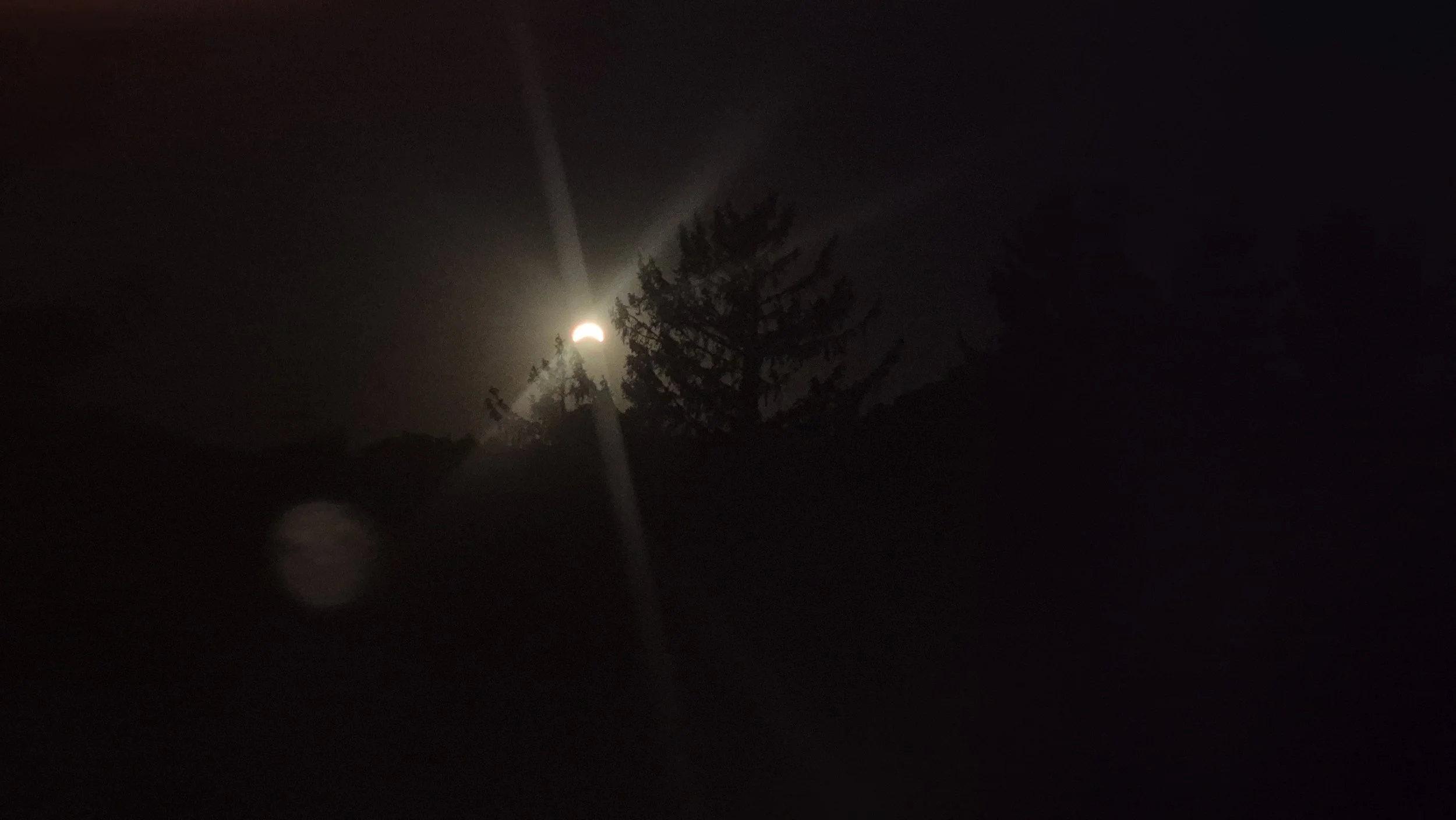
View of the eclipse on 12th August 2026 from Zurich, through my DIYed filter
Last week, I DIY'd the eclipse the same way we DIY our health.
Disclaimer: * don't try this at home *
The setup
Europe's August 12, 2026 total solar eclipse was the first visible from mainland Europe since 1999 — totality crossed Iceland and northern Spain, and the rest of the continent got a serious partial, up to 90-95% of the sun covered in places like the UK and Switzerland. Predictably, that produced a continent-wide scramble for certified eclipse glasses, and just as predictably, the scramble outran the supply. In the absence of any official CE-marked PPE (Personal Protective Equipment) I could actually get my hands on in time, but full of FOMO and curiosity, I built my own setup from home supplies, forum tips, and a bit of personal experimentation: a plain old CD layered with polarised sunglasses.
I even improvised my own "risk controls." The filters went over my phone's camera, not my own eyes, and we only ever looked at the pictures, at set intervals rather than staring continuously. And it worked.
Isn't this exactly what we do with our health?
We lean on wellness apps and devices, general-purpose AI tools, and unofficial advice, combined with our own experimentation. We add in some risk controls of our own — anonymising what we share with ChatGPT, or vetting information through volume, reviews, word of mouth. And guess what: it often works.
But the path is clumsy, uncertain, untested. It carries the quiet anxiety of solving problems alone and taking risks without a safety net. And the experience itself is rough, slow, and mentally taxing — exactly the way squinting through a CD and a pair of sunglasses is rough, slow, and mentally taxing compared to just putting on a pair of properly certified glasses and looking up.
That's exactly what the regulated tool is supposed to take care of
Whether it's a medical device, a clinical pathway, or CE-marked eclipse PPE, the whole point of regulation is to remove that burden from the individual. In the EU, eclipse glasses are Category II Personal Protective Equipment under Regulation (EU) 2016/425, tested against the EN ISO 12312-2 standard and requiring an EU type-examination from an independent notified body before they can legally be sold. That's a real, meaningful bar — genuine PPE blocks essentially all UV and harmful visible light and around 97% of infrared, verified by someone other than the manufacturer.
The problem is that the official road is still clumsy, patchy, and rough for many use cases. It was genuinely difficult to find real eclipse goggles this year, with resellers charging inflated prices on second-hand platforms and standard shops giving me confused looks when I asked whether they had any in stock. Consumer advocates and opticians across Europe warned throughout the summer that the market had filled with counterfeit glasses carrying fake ISO markings that were never actually tested to the standard they claimed — the same pattern that played out before the 2017 and 2024 North American eclipses. Regular sunglasses, no matter how dark, don't cut it either: they reduce visible brightness without blocking the harmful radiation, which paradoxically makes the sun more comfortable to stare at while still damaging the retina. So even where the regulated product exists on paper, in a genuine supply crunch it can be nearly as hard to access as no regulated product at all.
In healthcare, and especially in women's health, we don't just get the confused looks. We often get condescended to or ignored for years. Official diagnostic solutions are lacking, or clinicians simply aren't aware they exist, and access gets blocked at exactly the point where it matters most. So DIY-ing it is often the only option available — not a lifestyle choice, but the default when the regulated path doesn't show up in time, or doesn't show up at all.
The same pattern, in other regulated verticals
We see similar themes elsewhere: in products under the EU PPE Regulation, in cosmetics regulation, and in the AI Act's current high-risk framework. For me, the solution is consistent across all of them: a reasonable safety bar for consumer products, and a genuinely accessible regulatory bar for low-risk regulated products. That's the same principle behind carve-outs like TGA's exclusions for low-risk digital health software, which I've written about before — proportionate regulation isn't the enemy of access, it's usually the thing that makes access possible in the first place, provided the bar to clear it isn't set so high that only the largest players can reach it.
DIY health is here to stay, as part of the broader move toward health personalisation. Manufacturers and regulators both have a role to play in making it safer — not by trying to stamp DIY out, but by making the regulated, certified path genuinely as accessible as the improvised one currently is.
References
NASA Science, Total Solar Eclipse on August 12, 2026
Royal Observatory Greenwich, 12 August 2026 partial solar eclipse
Absolute Eclipse and Lunt Solar Systems, on EU PPE Regulation (EU) 2016/425, EN ISO 12312-2, and counterfeit eclipse glasses ahead of the 2026 eclipse
Forbes, Where To Get Safe Eclipse Glasses For The Aug. 12 Solar Eclipse, July 2026
Methodology note: This article is based on my original LinkedIn post (link), reflecting my personal experience DIY-ing eclipse viewing and drawing a parallel to how people navigate health information and tools without regulated support. AI assisted in elaborating the topic into a broader article by integrating background research on the 2026 eclipse, EU PPE regulation for eclipse glasses, and the counterfeit shortage that accompanied it. All analysis and regulatory perspectives are my own, and all content has been reviewed by me for accuracy.
